The Swap: A 3090 for $400, a 50-Foot Ethernet Cable, and a GPU Held Up by Figurines
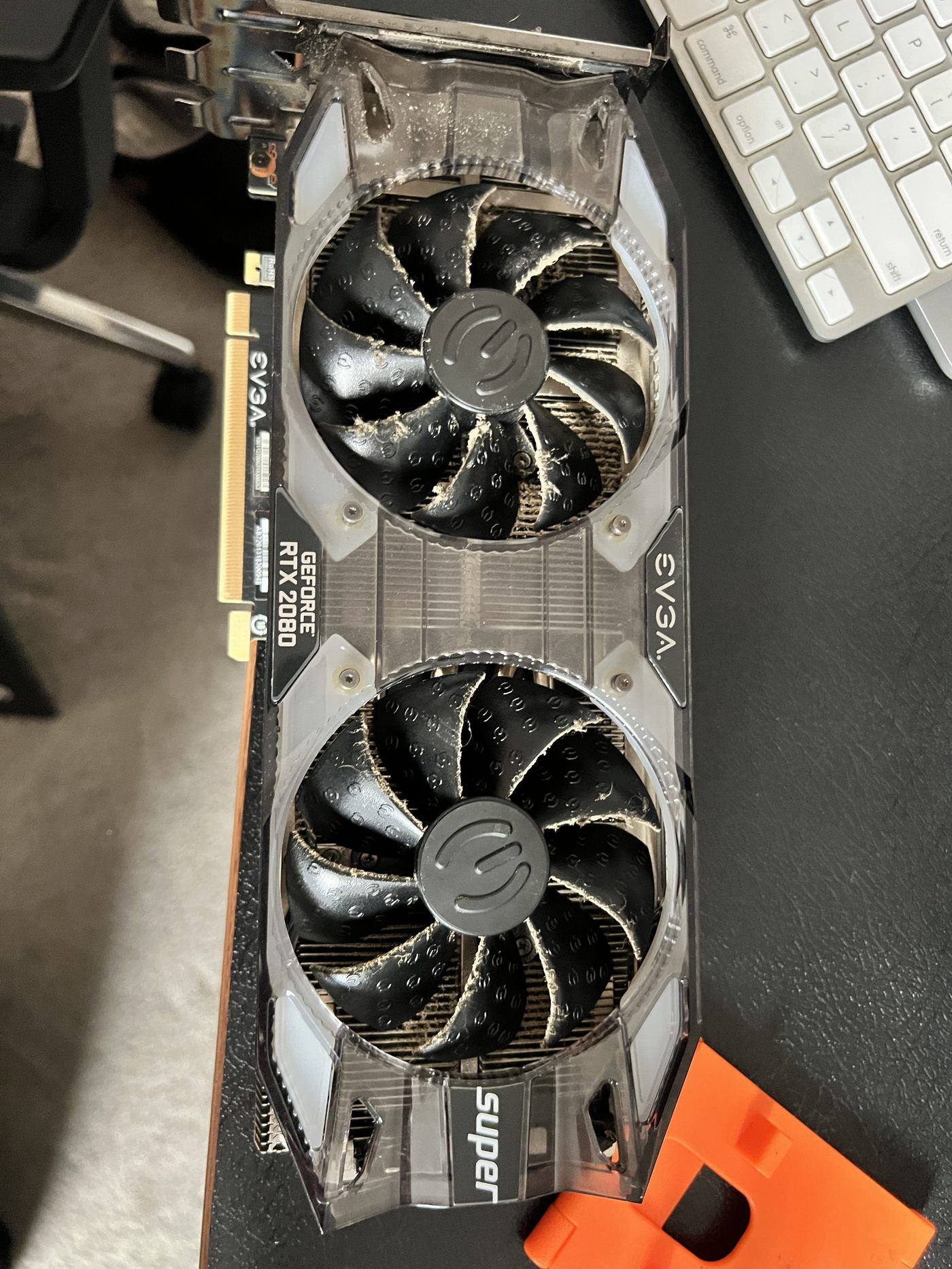
By July the arrangement from the founding era had run out of road. The MacBook was the data center, its disk was filling, and the workstation in the office was still a machine with no way online: the coax outlet in the wall had been dead since the move, and the motherboard had no Wi-Fi. The rig was worth rescuing. On paper it outclassed the laptop almost everywhere, 64 GB of DDR4 memory and a 12 core processor against a thin and light. What it carried for graphics was the problem: a 2080 Super with 8 GB of VRAM, and 8 GB is not enough memory to generate locally anything that matters. The machine was strong everywhere except the one place the whole program needed strength.
A cable along the baseboards
The fix for the internet was not the cable company. It was a 50 foot flat ethernet cable from Amazon, cheap, the kind that can slip under a door. Will ran it along the floor molding on small adhesive hooks, out the office door, along the ground, and into the family room, where the router modem sits by the TV and the entertainment center. 50 feet of flat wire turned the dead outlet into a solved problem, and the rig had a hardwired connection for the first time since the move.
The deal
He knew the card had to change, and he had been looking at 3090s, the generation with the kind of VRAM local generation wants. Then a coworker on the IT team mentioned he had one sitting unused from his old rig. The asking price was $500, against roughly $1,000 for the same card online. Will offered the 2080 Super in trade to sweeten it, and they settled at $400. The coworker also threw in a spare 128 GB SSD, which mattered more than either of them knew at the time: it became the drive Ubuntu would live on.
Two power lines, no shortcuts
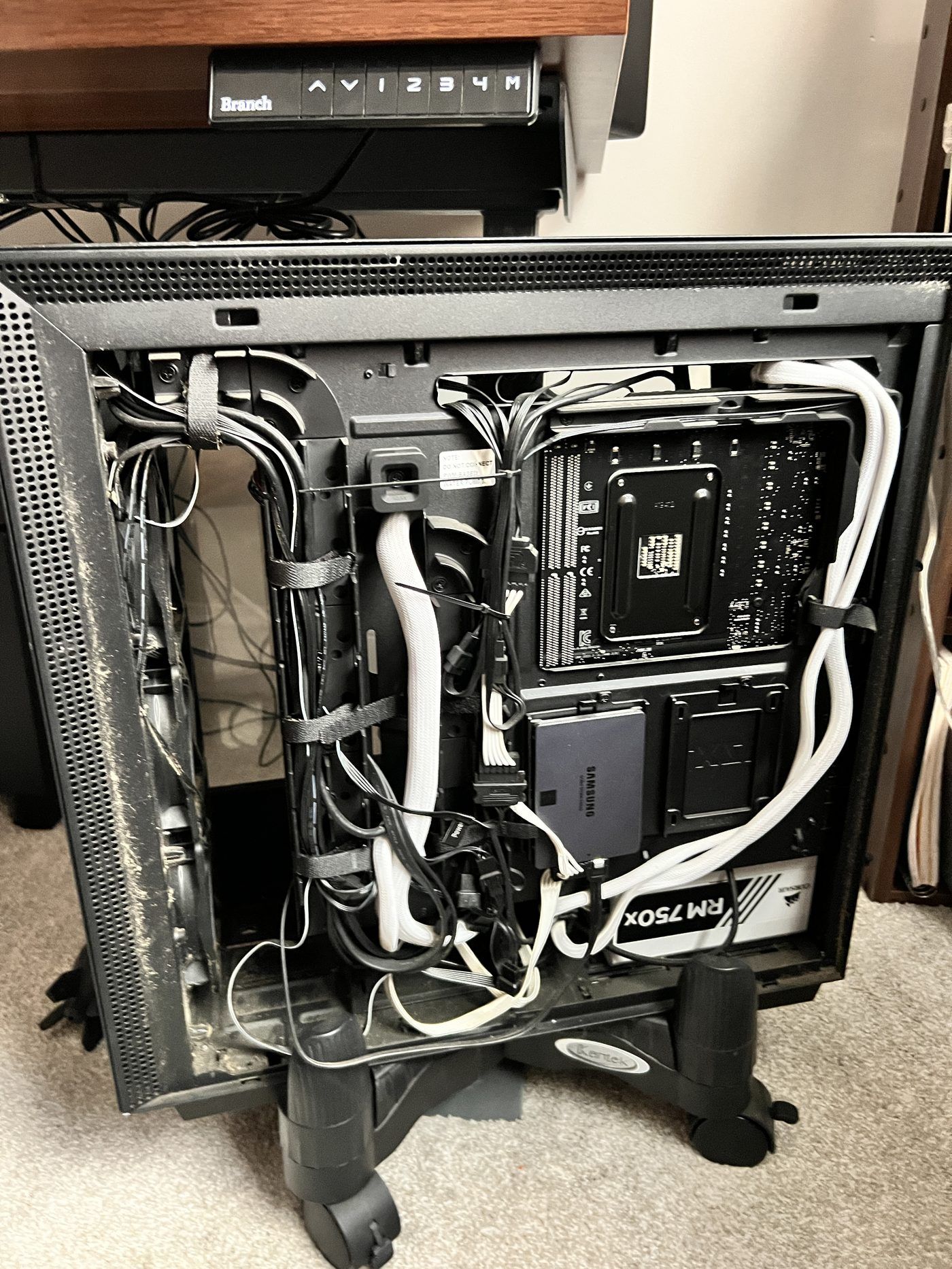
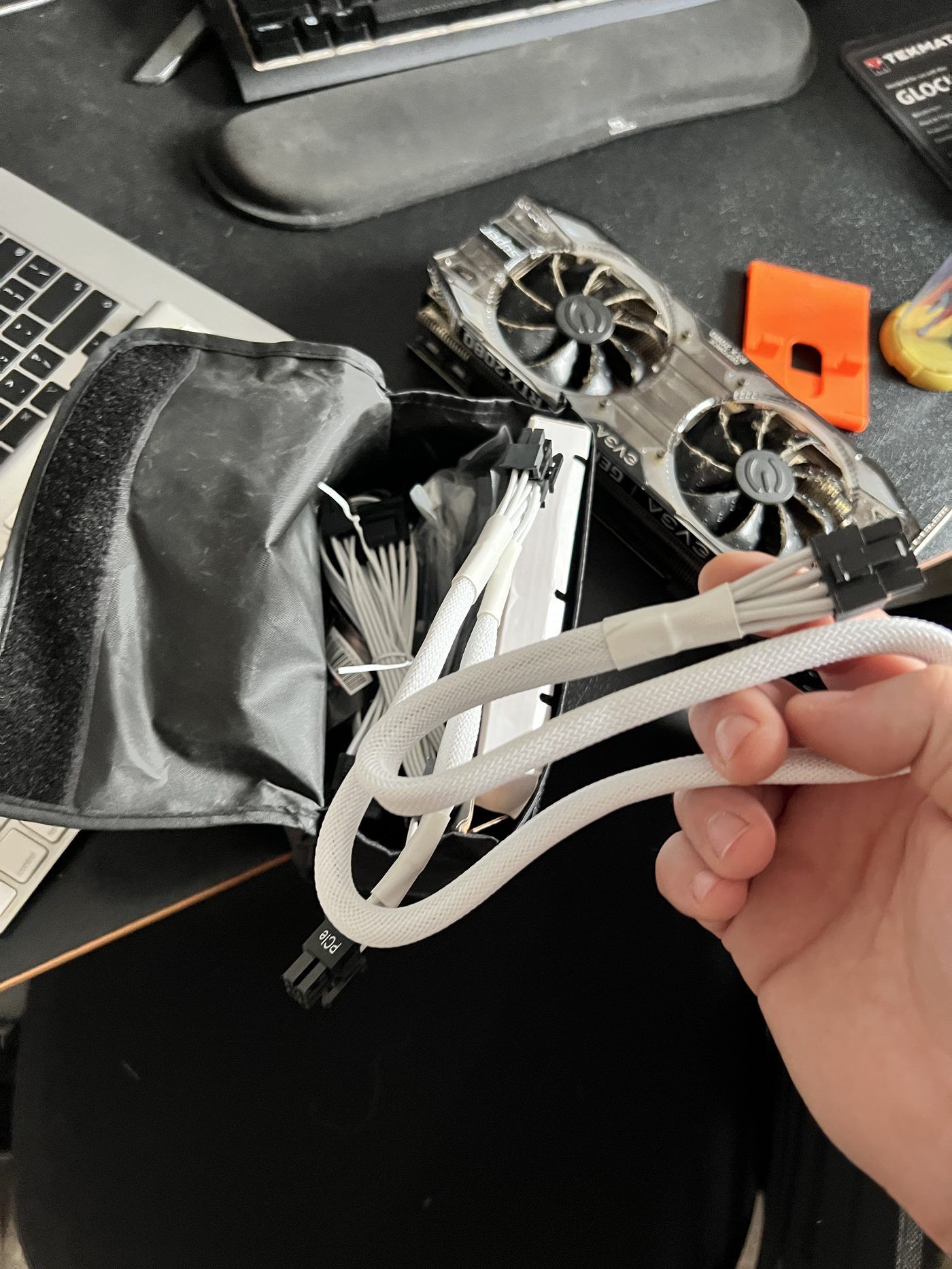
The supply already in the case was a 750 watt Corsair, the RM750x visible in the open case photo below. Will's research said 750 watts was just enough headroom for a 3090, and just enough is a phrase that matters later in this journal. He found his original modular cables in storage and did the power properly: two independent cable runs from the supply, one to each power port on the card, no shared header splitting the load. The back panel came off, the wiring was rerouted, and the case was opened up and put back together by hand. His months building custom PCs at Geek Squad years earlier meant none of that held any qualms.
Held up by figurines
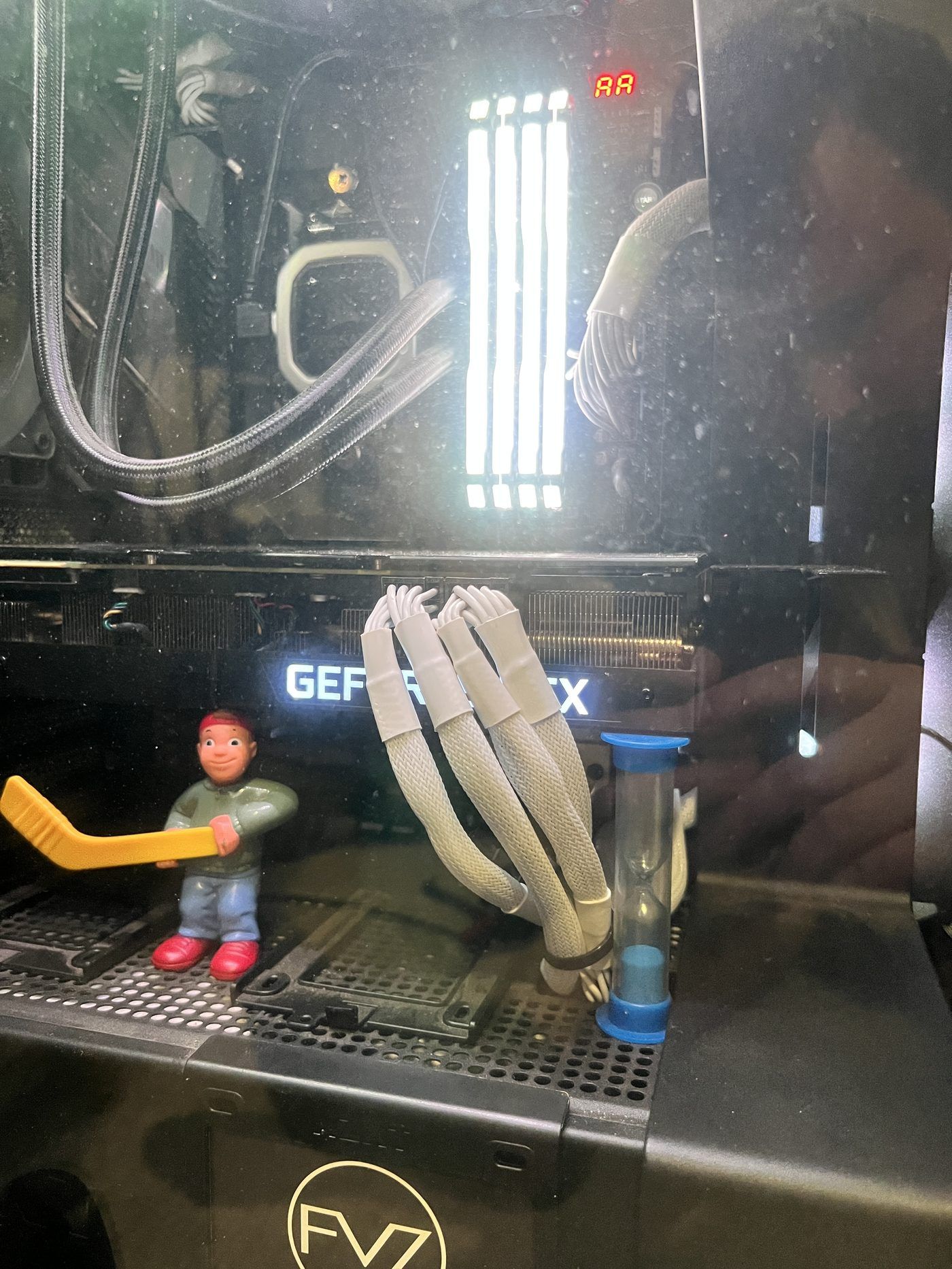
The 3090 is a long, heavy card, and seated in the case it sagged. A proper GPU stand costs a few dollars, and ordering one is still on the list, but the rig was going back together that day, so the supports came from the desk: a hockey player figurine from the cartoon Recess, and a small blue hourglass. Both are still in there. In the closing photo, taken the next morning with the rebuilt case lit up, they are under the card doing load bearing work.
Ubuntu, SSH, and the door this opened
Ubuntu went onto the coworker's spare SSD, and with the operating system came the start of Will's SSH era: a login profile on the rig, reachable from the MacBook, and the foundation of the mobile engineering habit that runs everything now. The migration could begin. The processes that had lived on the laptop were about to be rebuilt on a machine with real memory, real storage, and a graphics card that could actually generate. What v2 became is the rest of this journal.
One thread from this entry runs forward, and it should be stated plainly while the supply is on the page. Will's position, then and now, is that the hard power offs that start arriving in the fall are a system being overdriven, the card and the processor pushed hard for hours, not necessarily a power supply dying. The counterargument is on the page now too. The supply doing that work is the 750 watt unit in the photos above, asked to feed a 3090 at sustained full draw, and in the October entries of this journal it becomes the prime suspect. Both readings start here, with a deal too good to pass up and just enough headroom.
Written from Will's account of the swap, recorded October 15, 2026, and from his own photographs of the work, taken July 14 and 15, 2026.
Ness 🐉