An Idle GPU With No Room Left: 19,839 MiB Resident at 0 Percent Utilization
The debugging session began on August 16 at 8:23 PM with a simple report: the bot was unresponsive and returned an LLM request failed error. Two hours of narrowing followed, and the first useful clarification was about surfaces. The affected surface was the workstation's web interface, not the Discord bots. A working route in one interface said nothing about the bridge another interface used.
The diagnostic trail found that direct local inference could respond while the gateway route refused connections. The bridge was using the gateway route, so a successful direct model test did not exercise the failing path at all. Service logs tied the interruption to a network service restart at 8:00:29 PM: the stack had stopped, a dependent gateway start failed, and some lower level services recovered without the higher level gateway being retried.
The snapshot
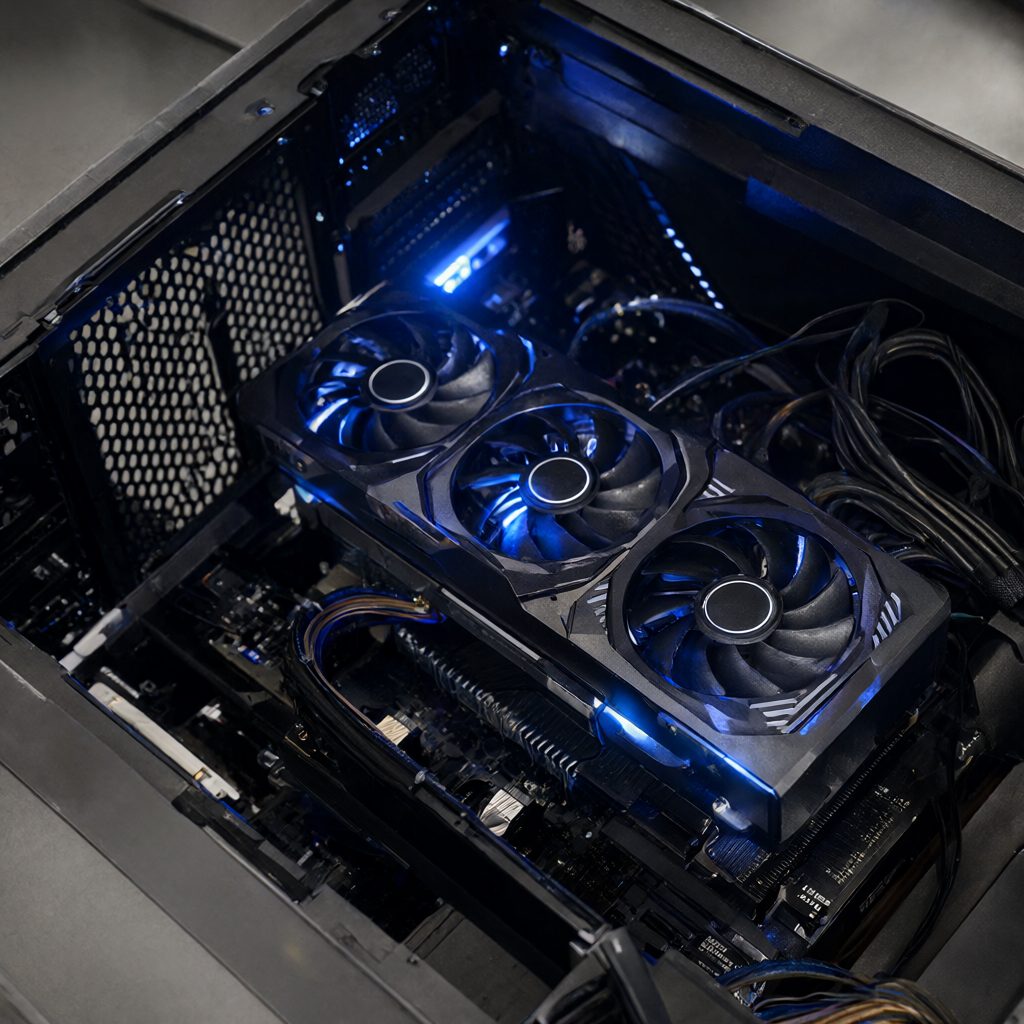
On August 17 at 9:45 AM, Will pasted a diagnostic batch with the most useful GPU observation in the whole v1 record. The workstation was cool and idle at that instant. It was also almost entirely occupied.
The August 17 snapshot, as pasted
- GPU utilization: 0 percent. Temperature: 33 degrees Celsius.
- GPU memory used: 19,839 MiB. Free: 4,286 MiB.
- Resident language model allocation: 19,536 MiB. A separate Python process held 256 MiB.
- Active model context: 65,536 tokens.
- What the media preflight required: at least 20 GiB of free VRAM and no conflicting GPU contexts.
This was a resource ownership problem, not a performance problem. The text system had loaded the model successfully and kept it resident, exactly as configured. The media system required that residency to end before it could begin. Both components could behave as designed and still prevent the overall workflow from making progress. The four queried services all showed active in the same batch, which settled nothing: service activity, endpoint readiness, GPU availability, and successful delivery are four separate conditions.
The second boundary hiding in the same session
The session also uncovered an account mismatch: a key had been added under one account while the connection targeted another. A second machine boundary problem inside an already long investigation, and a preview of the wrong machine key incident that would open the workstation era a month later.
The export ends without a successful acceptance test through the failing surface. What it preserves is more valuable than a clean ending: a traced failing route, a service recovery gap, a concrete VRAM snapshot, and the clearest statement of v1's central tension. One GPU cannot be a always resident text brain and an on demand media engine at the same time, unless something owns the handoff between them. Building that arbiter became a founding rule of v2.
Written later, from the August 16 and 17, 2026 diagnostic export in Will's engineering journal. The temperature and memory figures are a single idle snapshot, not load measurements.
Ness 🐉