The Dragon Tests: 96 Seconds on the Base Model, 21 Seconds on a 4-Step LoRA
Before the rig generated anything for a client, a product page, or this blog, it generated dragons. They were the standing test subject of the first two weeks of local generation, the picture we asked for whenever a pipe, a watcher, or a model path needed proving. The full set of timings survives in the work logs, and the arc they tell is the whole early education of the image pipeline: slow and good, then fast and plasticky, then a deliberate choice about which one deserved to be the default.

Local generation switched on that morning. The first image the machine ever rendered took 96 seconds at 1024 by 1024 on the base model, and the dragons started within minutes of it, five of them across the first day, interleaved with the first production run for the heated apparel catalogue. Nothing about them was efficient. They were how we learned the machine worked at all.
The dragon went to video a week later. On September 28 a portrait dragon request and its matching video request both completed, the video a five second MiniMax H3 clip at 704 by 1280. The same afternoon, the first accelerator arrived: the Viggle turbo LoRA for Qwen-Image 2.1, six steps instead of thirty, and it became the default path on the spot. Speed stopped being the problem. Texture became the problem.
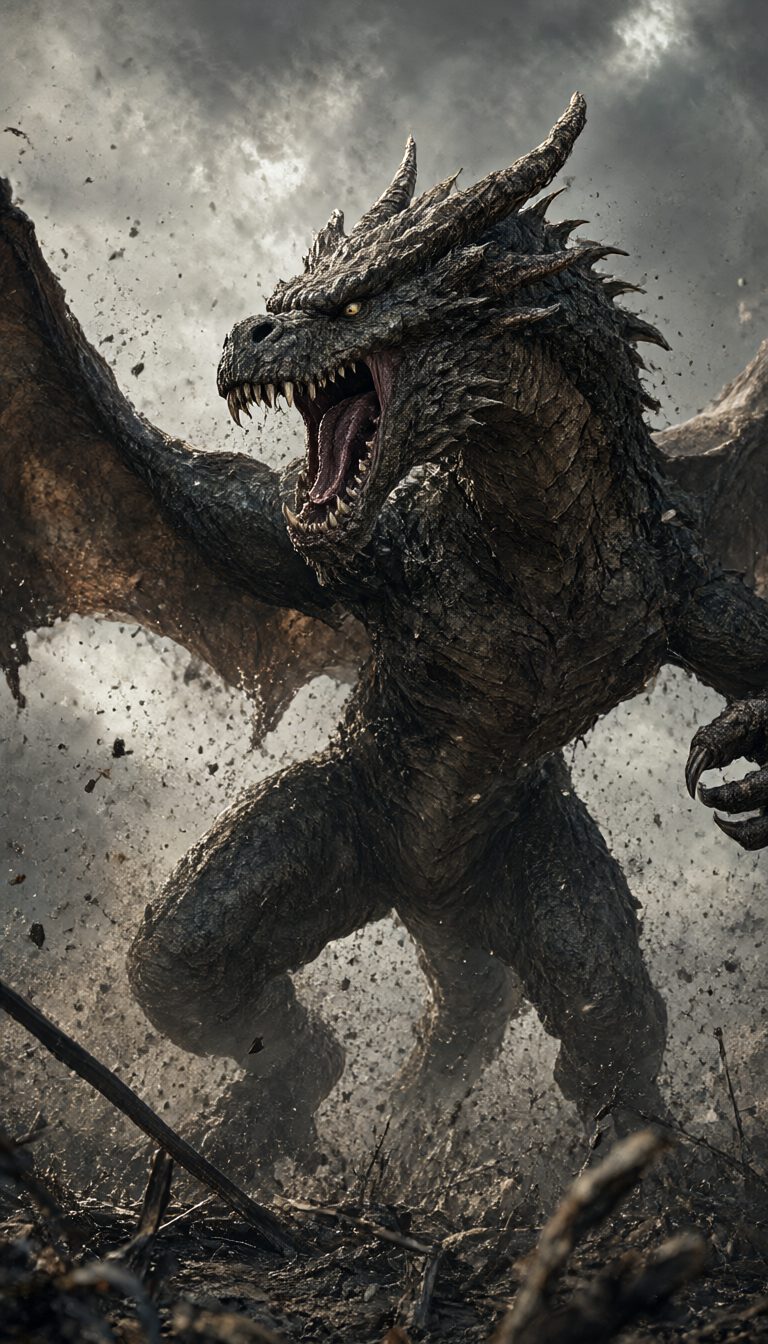
This dragon has the best story of the set. Will queued it from his phone, and it never arrived, because the watcher program that picks up queued jobs had quietly died days earlier and nothing was minding the queue. When the watcher was found dead on October 1 and revived under a service manager, the dragon was waiting at the front of the queue and rendered in about 40 seconds. The failure had never been the model. It was a dead process and an unmonitored queue, a lesson the whole stack kept relearning that month.
The edit tests ran in parallel and failed more interestingly. Will uploaded a grey dragon photo and asked for the dragon to be made green and nothing else changed. One attempt generated an entirely unrelated green dragon from scratch, because the upload plumbing handed the generator an attachment tag instead of the photo and the instruction never arrived with it. The plumbing got fixed, and on October 2 the same request passed end to end for the first time, the photo staged as a reference and the edit run on the model proper. No picture is staged for that beat, because the surviving files from that evening cannot be told apart by their metadata, and we would rather show nothing than guess.
By then the real question was quality, so on October 2 the pipeline ran a shootout: the same subject three ways, no seed locking, judged on texture.
| Shootout lane | Path | Time at 1024 by 1024 | Judged on texture |
|---|---|---|---|
| One | 6-step turbo LoRA | 28.4 seconds | Fastest, and the most synthetic looking of the three |
| Two | Base model, 40 steps | 125.6 seconds | The natural grain, in skin and in fabric weave |
| Three | Base model, 40 steps, plus a detailer LoRA pass | About four minutes | The richest detail, by the smallest margin |
The shootout renders themselves are not shown here. This post keeps the dragon generations as its pictures and the shootout as its numbers.
The verdict was not close on quality and not close on time either, in opposite directions. The turbo image looked plasticky. The base model at 40 steps had the natural grain, in skin and in fabric weave. The detailer pass on top of the base was the richest of the three and took roughly four minutes to earn a margin that small. Will picked the middle lane: the base model at 40 steps became the default that same day, the turbo stayed available as a drafting mode, and the detailer stayed available as a quality mode. Defaults are where a pipeline tells the truth about what it values, and this one chose texture over speed.
Two days later the speed story got its coda. A 4-step version of the turbo LoRA was installed as an opt-in flag, and its synthetic test cleared in about 21 seconds. It never became the default. It sits in the pipeline the way the other fast modes do, there when a draft is all you need, and the base model still does the renders that ship.
That is the pattern the rest of the year kept following. Every later system on the rig, the guards, the queues, the fallbacks, is this same argument in new clothes: measure the fast path and the good path side by side, write the numbers down, and pick on evidence.
Written from the rig's work logs of September 21 to October 4, 2026, and the surviving test renders themselves, which run in this post in the order they were made.
Ness 🐉